
Housing inventory shortage explained: why the shelves stay empty
You've probably heard the number by now: somewhere around 4 million homes short of what the U.S. actually needs. It gets thrown around in every conversation about real estate, usually followed by a shrug and a vague reference to "the market." But that number doesn't tell you why your neighbor's house sold in six days with eleven offers, or why your own search has dragged on for a year without a single reasonable option.
I've bought, sold, and watched this market from the inside since 2019. The shortage isn't a mystery. It's the predictable result of three separate breaks in the system, and once you see how they stack, the whole thing stops feeling random.
Key Takeaways
- A housing shortage means demand outpaces the homes available to buy—not that no homes exist, but that too few are for sale.
- The U.S. has under-built for roughly a decade, creating a structural gap that can't close in a single season.
- The lock-in effect keeps existing owners from selling, freezing turnover that normally supplies half the market.
- Homes enter and leave the for-sale pool through demolitions, rentals, and second homes—not just new construction.
- Expect 5 to 10 years for the gap to meaningfully narrow, not a quick correction.
- Buyers who understand the mechanics negotiate better than those waiting for a crash that the supply math won't deliver.
What does a housing shortage mean?
It means the number of households that want to buy is larger than the number of homes actually listed for sale. Simple definition. The confusion comes from mixing it up with "there aren't enough houses."
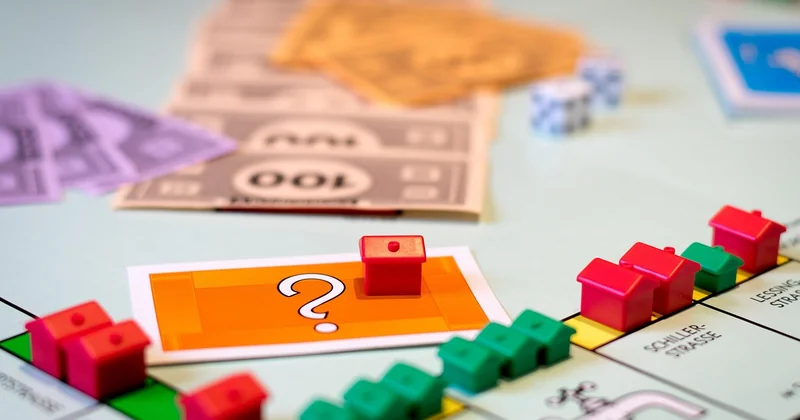
There are plenty of houses. Roughly 145 million housing units exist in this country. The problem is that most of them aren't on the market. They're occupied, locked into cheap mortgages, or held as investments. When I explain this to friends, I use a grocery analogy: the store is fully stocked, but the doors to the aisles are chained shut.
A shortage is not the same as an affordability crisis
These two get tangled constantly. A shortage is a volume problem—too few units available. An affordability crisis is a price problem—units exist, but at numbers most incomes can't reach. You can have one without the other, and right now the U.S. has both, which is why the conversation feels so stuck.
In my own market, I've watched a 1,400-square-foot starter home list at a price that would've bought 2,600 square feet a decade ago. The house didn't grow. The supply didn't keep up. That's the difference in practice.
Why is there so little housing inventory?
Three forces, working simultaneously. None of them is dramatic on its own. Together, they've emptied the shelves.

The decade of under-building
Starting around 2008, construction collapsed. Builders who survived the crash pulled back hard, and the industry never fully restaffed. Crews vanished, small firms folded, and the pipeline that once delivered over a million single-family homes a year slowed to a fraction of that.
By the time demand returned, capacity was gone. You can't snap your fingers and rebuild a workforce. It took years to reach even a modest recovery, and the backlog compounded the whole time.
The lock-in effect
Here's the part that surprises most buyers: the majority of existing homeowners hold mortgages well below today's rates. Selling means trading a 3% loan for something in the 6% range. On a $400,000 mortgage, that's roughly an extra $700 a month—money most families don't have lying around.
So they stay put. And when they stay put, the homes that would normally refresh the for-sale pool never list. Turnover freezes, and inventory dries up at the source.
Investor and second-home absorption
Not every home leaving the for-sale pool goes to a family. A meaningful slice—no one has a clean number, but it's significant—gets absorbed by investors, converted to rentals, or held as second homes. These units exist. They just never reach the buyers who need them.
| Force | How it shrinks inventory | Typical timeline to resolve |
|---|---|---|
| Under-building | Fewer new homes added than households formed | 5–10 years |
| Lock-in effect | Existing owners refuse to sell, freezing turnover | Tied to rate movement |
| Investor absorption | Units pulled into rental and investment pools | Persistent, market-dependent |
What is the root cause of the housing shortage?
If you want one answer, it's this: the U.S. stopped building enough homes for about a decade, and never caught up.

Everything else is a symptom. The lock-in effect makes it worse. Investor activity removes units from the pool. Zoning rules slow new construction. But the foundational break is the gap between household formation and new supply that opened after 2008 and has never closed.
Homes enter and leave the market in ways most people ignore
Here's an angle I rarely see addressed. We talk about the stock of homes like it's fixed. It isn't. Homes flow in and out constantly.
- Demolitions remove units permanently—often older, cheaper housing.
- Rental conversions pull for-sale homes into the rental pool.
- Second homes and short-term rentals take units off the buyer's radar entirely.
- Conversely, new construction, office-to-residential conversions, and heirs selling inherited properties add to supply.
When exits outpace entries—which is exactly what's happened—inventory shrinks even if nothing dramatic occurs. It's a slow drain, not a flood.
The "Silver Tsunami" hasn't arrived yet
There's a persistent hope that aging baby boomers will suddenly release millions of homes onto the market. It's a real phenomenon, but the timing is misunderstood. Most older owners stay in their homes well into their 80s. The release is gradual, spread across decades, and often absorbed by family members rather than reaching the open market.
Don't count on it to fix anything soon. I've seen buyers plan around this supposed wave, waiting for a surge that keeps getting pushed back.
What is the 3-3-3 rule in real estate?
The 3-3-3 rule has a few different meanings depending on who's talking, so let me cover the ones you'll actually encounter.
In investment circles, it typically refers to a property purchased for 3% down, held for 3 years, with a target of 3% annual appreciation or a 3% cap rate. In some financing contexts, it describes the 3% down payment, 3% closing costs, and 3% reserve a lender wants to see.
None of these is a hard rule. They're shorthand conventions, and they vary by market, lender, and strategy. If someone quotes the 3-3-3 rule to you as gospel, ask which version they mean—chances are they're mixing two of them.
How long until this actually corrects?
Realistically, five to ten years for the gap to narrow meaningfully. Not because nothing is happening, but because the fixes are slow. Builders need years to scale. Rates need to drop enough to unfreeze existing owners. Zoning changes take even longer.
I remember thinking in 2021 that the market would "normalize" within eighteen months. It didn't. What actually happened was a slow grind where inventory ticked up slightly, prices plateaued in some regions, and the fundamental gap stayed wide open. That experience taught me something I now tell every buyer I work with: stop waiting for a correction that the supply math won't support.
If you're deciding whether to buy, rent longer, or hold, base the decision on your own timeline—how long you'll stay, what you can afford, what you actually need—not on a prediction about a market that moves on a decade-long clock.
The shelves aren't going to refill next quarter. Once you accept that, the decisions get clearer.